












The nation is enveloped in grief as Nigeria mourns the passing of former President Muhammadu Buhari, who died on July 13, 2025, in London after a brief illness at the age of 82. A towering figure in Nigerian politics, Buhari’s legacy—marked by his dual roles as a military ruler and democratically elected leader—continues to spark conversations across the country. As the world reflects on his contributions, President Bola Tinubu has taken a bold step by renaming the University of Maiduguri to Muhammadu Buhari University, a decision announced during a special Federal Executive Council session on Thursday, July 17, 2025. With a state burial in Daura drawing thousands and public reactions found on social media ranging from admiration to critique, this article, written at 12:15 PM BST on Friday, July 18, 2025, dives into the mourning process, the renaming controversy, and the ongoing dialogue surrounding his impactful tenure.
How to Mourn and Honor Former President Muhammadu Buhari’s Legacy in 2025
Muhammadu Buhari’s death marks the end of an era for Nigeria, a nation he served with unwavering dedication across decades. Born on December 17, 1942, in Daura, Katsina State, Buhari first rose to prominence as a military leader following a 1983 coup, later transitioning to a democratic leader after his historic 2015 election victory—the first time an opposition candidate defeated an incumbent in Nigeria’s modern era. His passing in a London clinic, confirmed by President Tinubu’s spokesperson, has triggered a wave of national mourning, with flags flying at half-mast and a seven-day mourning period declared from July 13 to July 20, 2025.
A State Burial That United a Nation
The state burial in Daura on July 15, 2025, was a poignant affair, attended by thousands, including President Tinubu, Vice President Kashim Shettima, and international dignitaries like Guinea-Bissau’s President Umaro Sissoco Embaló. Held in accordance with Islamic rites at Buhari’s private residence, the ceremony featured a 21-gun salute and military honors, reflecting his stature as a former army general. Mourners, including traditional leaders, gathered at the central mosque for funeral prayers, with emotional tributes pouring in from across the globe. Tinubu described Buhari as a “patriot, soldier, and statesman,” while former rival Goodluck Jonathan hailed his “selfless commitment” and “deep sense of patriotism.”
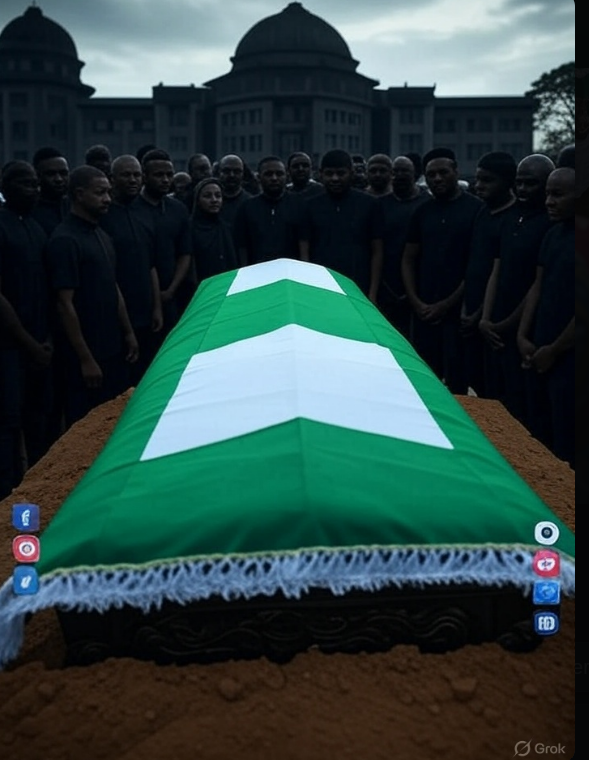
The event, broadcast live, showcased Nigeria’s unity in grief, yet it also highlighted the polarized views on his legacy. Social media buzzed with images of the burial, with hashtags like #BuhariLegacy trending as citizens shared memories of his anti-corruption stance and disciplined leadership style. The spectacle of his body, wrapped in the Nigerian flag and interred in his hometown, underscored a farewell fit for a leader who shaped the nation’s history.
The Renaming Controversy: Muhammadu Buhari University
In a significant move to honor Buhari, President Tinubu announced the renaming of the University of Maiduguri to Muhammadu Buhari University during a Federal Executive Council meeting on July 17, 2025. This decision aims to immortalize Buhari’s contributions to education and national development, particularly his efforts to address insecurity in the northeast, where the university is located. The rename reflects his tenure’s focus on infrastructure and stability, with the institution now poised to carry his name as a symbol of his legacy.
However, the move has ignited debate. Supporters argue it celebrates a leader who broke political barriers and championed order, while critics question the timing and appropriateness, given ongoing economic challenges and mixed reviews of his presidency. Posts found on social media reveal a split: some praise the gesture as a fitting tribute, with comments like “A legacy etched in stone,” while others call it premature, citing unresolved issues from his administration. This controversy adds a layer of complexity to the mourning process, inviting public discourse on how best to remember him.
Public Reactions Found on Social Media: A Nation Divided
Social media has become a battleground for opinions on Buhari’s legacy, offering a real-time pulse of public sentiment. Admiration flows for his personal integrity and anti-corruption campaigns, with many recalling the War Against Indiscipline (WAI) initiative from his military days. Vice President Kashim Shettima echoed this, praising Buhari’s “pursuit of justice” during a tribute, noting his efforts to instill discipline despite economic hardships.
Yet, the conversation is far from unanimous. Critics highlight economic recessions, security lapses with Boko Haram, and human rights concerns during his rule, with posts found on social media questioning, “Did his discipline outweigh the struggles?” The 2020 Lekki Toll Gate shooting and prolonged medical leaves in London remain sore points, fueling debates about transparency. Trending discussions show a nation grappling with pride in his democratic milestone and disappointment in unmet promises, creating a rich tapestry of reactions as Nigeria processes his loss.
Global Tributes and National Mourning
Tributes have poured in from international leaders, reflecting Buhari’s pan-African influence. The African Union Commission Chairperson, Mahmoud Ali Youssouf, lauded him as a “principled leader” and advocate for regional integration, while South Africa’s President Cyril Ramaphosa extended “deep condolences.” These global acknowledgments underscore Buhari’s role beyond Nigeria, cementing his status as a continental statesman.
Nationally, the government declared July 15, 2025, a public holiday, with the Northwest Governors Forum following suit across seven states. The Federal Executive Council’s emergency session and the dispatch of Vice President Shettima to London to accompany Buhari’s body back to Nigeria highlight the state’s commitment to a dignified farewell. As the seven-day mourning period continues, communities are holding funeral prayers in absentia, like those in Jos, Plateau State, fostering a collective grieving process.
Reflecting on a Complex Legacy
Buhari’s life was a study in contrasts—military ruler turned democrat, disciplinarian turned reconciler. His 2015 victory over Jonathan was a beacon of hope, yet his eight-year presidency (2015-2023) faced criticism for economic mismanagement and security failures. Analysts note his austere image resonated with the “talakawa” (poor northerners), but his health-related absences and slow decision-making, dubbed “Baba Go Slow,” eroded support. Despite this, his personal honesty in a corruption-riddled system remains a point of admiration.
The renaming of the University of Maiduguri and the state burial are attempts to frame his legacy positively, yet the public’s mixed reactions suggest a nuanced memory. As Nigeria mourns, the question lingers: How will history judge a leader who promised change but left a divided verdict? Engaging with this dialogue—through memorials, discussions, or educational initiatives—offers a path to honor his contributions while addressing past challenges.
What This Means for You
For Nigerians and global observers, Buhari’s passing is a moment to reflect on leadership, legacy, and national identity. Whether you admired his discipline or critiqued his tenure, participating in the mourning process—attending local tributes, sharing thoughts online, or exploring his impact—connects you to this historic moment. The renamed university invites future generations to study his era, while the ongoing social media debates keep his legacy alive.
Stay informed with updates from BBC News, Al Jazeera, or posts found on social media as the nation continues to process this loss. As tributes evolve and the university renaming takes shape, your engagement can shape how Buhari’s story is told.
Visit www.iwerenews.com for more trending news.