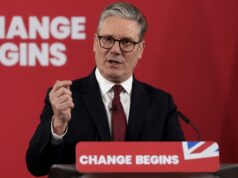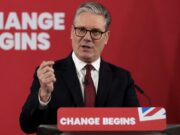















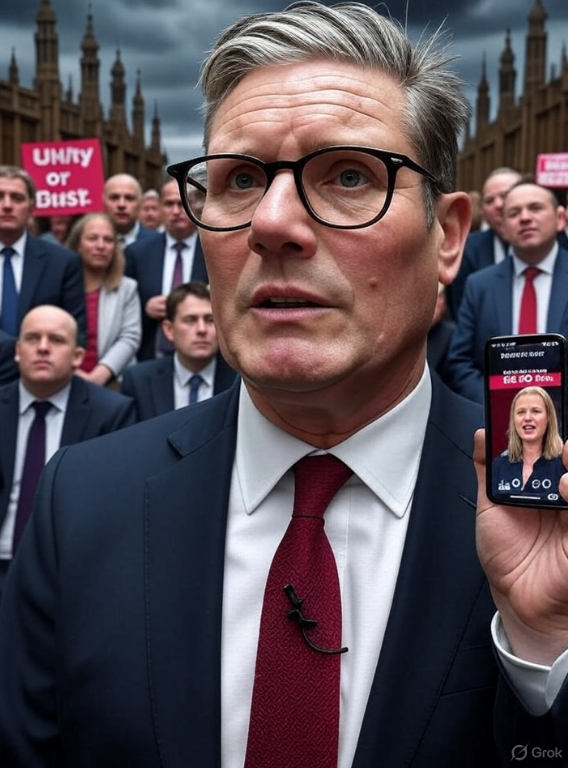
As the United Kingdom navigates the political landscape of 2025, the Labour Party is grappling with significant internal strife that threatens its unity and governance. With tensions escalating over policy decisions, leadership challenges, and public backlash, the party under Prime Minister Keir Starmer is at a crossroads. This news article, updated at 02:15 PM BST on Thursday, July 17, 2025, dives into the latest developments, exploring the causes, key figures, and potential impacts of this internal conflict. Stay informed as we unpack one of the UK’s most pressing political stories today!
Labour Party Faces Internal Strife: A Deep Dive into 2025’s Political Chaos
The Labour Party, fresh off a historic landslide victory in 2024, is now facing a wave of internal discord that could reshape its future. From suspensions of rebel MPs to strained union relationships, the party’s cohesion is under scrutiny as of July 17, 2025. This turmoil reflects broader challenges in aligning diverse factions under Starmer’s leadership, making it a critical moment for Labour’s direction.
Roots of the Rebellion
The latest flashpoint emerged on July 16, 2025, when Starmer suspended four Labour MPs—Rachael Maskell, Neil Duncan-Jordan, Brian Leishman, and Chris Hinchliff—for persistent breaches of party discipline. These MPs, part of a 47-strong rebellion against proposed welfare cuts, voted against the government’s plans, forcing significant U-turns. Maskell, a former shadow cabinet minister, defended her stance as standing up for constituents, while others like Duncan-Jordan, a trade unionist, criticized the cuts as unaligned with Labour values.
This rebellion highlights a growing divide between Starmer’s centrist agenda and the party’s left wing. The welfare cuts, initially aimed at saving £5 billion annually, were watered down after backbench pressure, revealing a leadership struggling to maintain control. Critics within the party, as noted in recent reports, describe this as a “climate of fear,” suggesting Downing Street’s heavy-handed approach may backfire.
Union Tensions Escalate
Adding fuel to the fire, the Unite union’s decision to suspend Deputy Prime Minister Angela Rayner over the Birmingham bin strikes has deepened the rift. Announced earlier this month, this move signals a potential funding crisis for Labour, which relies heavily on union donations. Unite’s leader, Sharon Graham, accused the party of failing to defend working people, hinting at a possible split that could mirror historical schisms.
The row stems from Rayner’s support for Birmingham City Council’s handling of the strike, a decision that has alienated union members. With Unite contributing over £1.2 million annually in affiliation fees, this conflict could force Labour into a financial squeeze, compounding existing economic pressures from a shrinking economy. Posts found on X reflect public sentiment, with some users labelling it a “betrayal” of Labour’s working-class roots.
Leadership Under Pressure
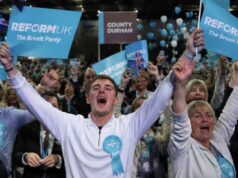
Starmer’s leadership is increasingly under the microscope. His decision to suspend the MPs, despite promises to mend ties with backbenchers, has drawn sharp criticism. Sky News reported backbenchers calling it an “appalling” move, warning it could bolster Reform UK’s rise. This comes amid a series of U-turns—on welfare, winter fuel payments, and disability benefits—painting a picture of a government struggling to deliver on its manifesto.
Public perception is shifting too. The Telegraph noted that nearly half of Britons no longer understand Starmer’s vision, a sentiment echoed in posts found on X where users express disillusionment. With his popularity dipping to historic lows, some speculate a cabinet reshuffle or even a new chancellor might be on the horizon, though senior voices defend Starmer and Rachel Reeves as the face of modern Labour.
The Left Wing Exodus
The potential formation of a new left-wing party, led by Jeremy Corbyn and former MP Zarah Sultana, adds another layer of strife. Sultana’s resignation in early July 2025, followed by talks of a movement to Labour’s left, has reignited debates about the party’s ideological drift. Corbyn’s allies argue Starmer’s expulsions and policy shifts have created space for this venture, with research suggesting it could siphon 10% of the vote, impacting Labour and the Greens.
While Corbyn has not confirmed his involvement, the prospect of a splinter party threatens to fragment the left-wing vote. This development, trending on X, has sparked mixed reactions—some see it as a chance for renewal, others as a distraction from Labour’s governance challenges.
Economic and Social Impacts
The internal strife coincides with broader economic woes, with the UK economy contracting by 0.1% for the second month in May 2025. This downturn, coupled with proposed tax raids on middle-class earners, has fueled discontent among Labour’s traditional base. The party’s handling of welfare and industrial disputes, like the ongoing junior doctors’ strike, further erodes trust.
Socially, the conflict is playing out publicly, with protests and online debates amplifying the divide. The suspension of trade envoys like Rosena Allin-Khan and Bell Ribeiro-Addy, also linked to the welfare rebellion, underscores the breadth of dissent within Labour’s ranks.
What Lies Ahead?
The coming weeks will be pivotal. An emergency parliamentary session is slated to address the suspensions, with Starmer expected to outline a strategy to restore unity. However, the party’s ability to balance discipline with inclusivity remains untested. Analysts suggest engaging with backbenchers and unions could mitigate the crisis, but failure to do so risks a lasting schism.
Posts found on X indicate a polarized public—some demand Starmer’s resignation, others urge the party to refocus on its core values. The outcome could influence Labour’s performance in future local elections and its cohesion ahead of the next general election.
Why This Matters to You
Whether you’re a Labour supporter, a political observer, or a concerned citizen, this internal strife affects the UK’s political stability and policy direction. A divided Labour could weaken its ability to address economic recovery, healthcare, and immigration—issues that touch every household. Staying informed is your best defense against the uncertainty.
For the latest updates, follow BBC News, The Guardian, or posts found on X as the situation evolves. The Labour Party’s journey through this turmoil will shape Britain’s future—watch closely!
Visit www.iwerenews.com for more trending news.