















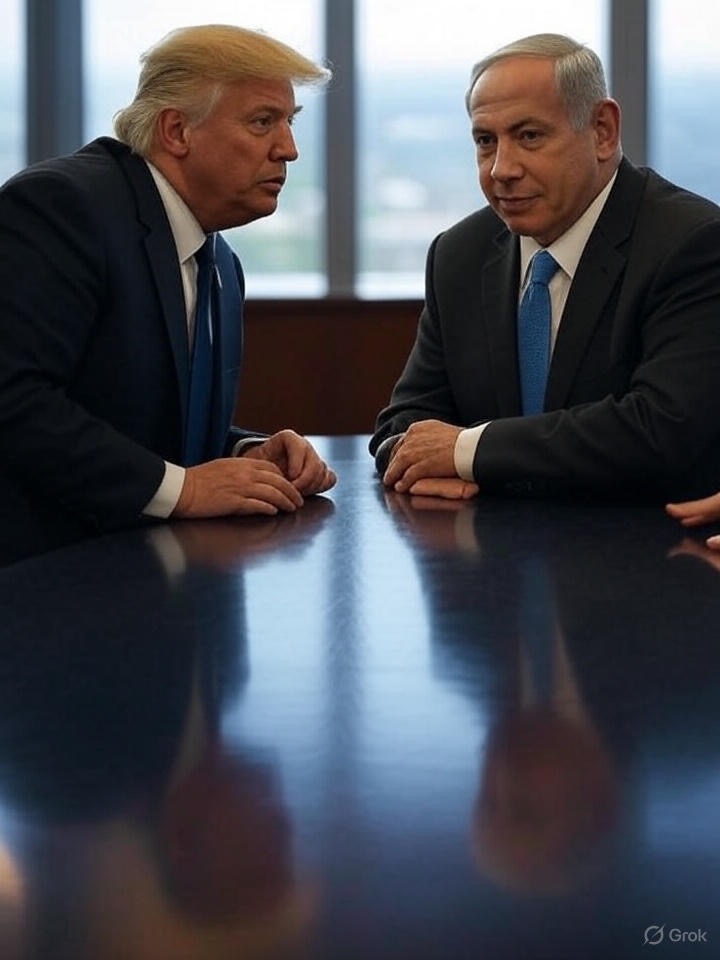
Washington, D.C. – July 7, 2025 – U.S. President Donald Trump has intensified diplomatic efforts to secure a ceasefire in the ongoing Israel-Hamas conflict in Gaza, urging both parties to finalize a deal that would facilitate the release of hostages still held by Hamas. The announcement comes ahead of a high-stakes meeting with Israeli Prime Minister Benjamin Netanyahu at the White House on Monday, where the Gaza war and regional stability will take center stage. Trump’s push for a resolution reflects growing international pressure to end the nearly two-year conflict, which has claimed tens of thousands of lives and displaced millions.
In a statement posted on his Truth Social platform, President Trump revealed that Israel has agreed to conditions for a 60-day ceasefire in Gaza, a significant development in the protracted negotiations. “My representatives had a long and productive meeting with the Israelis today on Gaza,” Trump wrote, emphasizing that the United States would work with all parties to end the war. He urged Hamas to accept the proposal, warning, “I hope, for the good of the Middle East, that Hamas takes this Deal, because it will not get better — IT WILL ONLY GET WORSE.”
The proposed ceasefire, mediated by U.S. Special Envoy Steve Witkoff alongside Qatari and Egyptian officials, includes the release of approximately 10 living Israeli hostages and the remains of 18 deceased captives in exchange for a temporary halt in hostilities and the release of Palestinian prisoners held by Israel. The deal also outlines provisions for increased humanitarian aid deliveries to Gaza, addressing the dire conditions faced by the enclave’s 2.3 million residents, many of whom are living in makeshift accommodations amid a worsening hunger crisis.
The war in Gaza, which began on October 7, 2023, following a Hamas-led attack on Israel that killed 1,200 people and saw 251 individuals taken hostage, has resulted in significant loss of life and widespread destruction. According to the Hamas-run Gaza health ministry, over 56,500 Palestinians have been killed in the ensuing Israeli military campaign, though the figure does not distinguish between civilians and combatants. Israel reports having killed approximately 15,000 Hamas fighters, while accusing the group of using civilian infrastructure as cover, a claim Hamas denies. The conflict has displaced nearly the entire population of Gaza and prompted allegations of war crimes and genocide at international courts, which Israel also denies.

Trump’s call for a ceasefire builds on previous efforts, including a brief eight-week truce in early 2025 that collapsed in March when Israel resumed military operations after failing to reach an agreement with Hamas on subsequent steps. The sticking point in negotiations has consistently been whether any deal should include a permanent end to the war. Hamas insists on a comprehensive agreement that guarantees a full Israeli withdrawal from Gaza and a permanent cessation of hostilities, while Israel, under Netanyahu’s leadership, has prioritized maintaining the ability to resume fighting to ensure Hamas’s defeat.
Israeli Foreign Minister Gideon Saar has indicated majority support within the government for a framework to release hostages, stating on X that the opportunity “must not be missed.” However, Netanyahu faces significant domestic challenges, as far-right members of his coalition, including Itamar Ben-Gvir and Bezalel Smotrich, have threatened to collapse the government if a permanent ceasefire is agreed upon. Analysts suggest that a temporary 60-day truce could be a politically viable option for Netanyahu, allowing him to appease his coalition while addressing international and domestic pressure to secure the hostages’ release.
Public sentiment in Israel is also shifting, with recent polls indicating that a significant majority of Israelis support ending the war, driven by the plight of the remaining hostages—estimated at 50, with fewer than half believed to be alive. Regular demonstrations in Israel have called for an immediate deal, with families of hostages urging both Trump and Netanyahu to prioritize their release. At a recent rally in Tel Aviv, Romi Cohen, sister of hostage Nimrod Cohen, emphasized the importance of sustaining the ceasefire effort, stating, “Don’t let the deal collapse before everyone comes home.”
Trump’s diplomatic push comes amid a broader regional strategy, following his administration’s role in brokering a fragile ceasefire between Israel and Iran after a 12-day conflict earlier this year. The Gaza ceasefire proposal is seen as part of a larger effort to stabilize the Middle East, with Trump also engaging in talks to restore calm along the Israel-Syria frontier. His administration has signaled a commitment to ending the Gaza conflict before his term progresses further, with Trump stating he will be “very firm” with Netanyahu during their upcoming meeting.
However, skepticism remains among Palestinian officials and Hamas negotiators. A Hamas official, Taher al-Nunu, told the BBC that the group is “ready and serious” for a deal but only if it guarantees an end to the war. Another Palestinian official familiar with the negotiations noted that the current proposal offers no substantive changes from a previous offer rejected by Hamas in June, citing unresolved core issues.
The international community, including the United Nations, has called for a resumption of full-scale aid deliveries to Gaza to address the humanitarian crisis exacerbated by flooding and cold weather. Israel’s ambassador to the UN, Danny Danon, has expressed readiness for a ceasefire, but the success of the talks hinges on Hamas’s response, expected later this week.
As Netanyahu prepares for his White House visit, the meeting with Trump is expected to focus not only on Gaza but also on broader regional issues, including Iran and Syria. Trump’s recent criticism of Netanyahu’s corruption trial, which he called a “political witch hunt,” has sparked speculation that the U.S. president may be leveraging his support to pressure Netanyahu into accepting a ceasefire deal. Israeli opposition leader Yair Lapid suggested that Trump’s intervention in the trial could be a strategic move to encourage a Gaza agreement.
With both sides cautiously optimistic but entrenched in their positions, the coming days will be critical in determining whether a ceasefire can be achieved. Trump’s direct involvement and the impending meeting with Netanyahu underscore the urgency of resolving the conflict, which continues to exact a heavy toll on both Israelis and Palestinians.