













The landscape of U.S. elections is stirring with debate as President Donald Trump has pledged to introduce an executive order to end mail-in ballots, a move announced on August 18, 2025. Shared via Truth Social and reiterated during a White House meeting with Ukrainian President Volodymyr Zelenskyy, this bold promise aims to reshape how Americans cast their votes ahead of the 2026 midterms. With legal experts raising eyebrows and voters buzzing on X, this development has sparked a mix of excitement and concern. In this friendly and informative analysis, we’ll explore Trump’s proposal, its potential impact, and what it means for the future of voting. Whether you’re a political junkie or just curious about the change, let’s dive into this evolving story together!
Trump’s long-standing scepticism about mail-in voting has resurfaced, promising a significant shift if implemented. Let’s break it down with a thoughtful look at the details and reactions.
Background and Trump’s Proposal
The announcement marks a new chapter in election and voting changes discussions.
The Executive Order Announcement
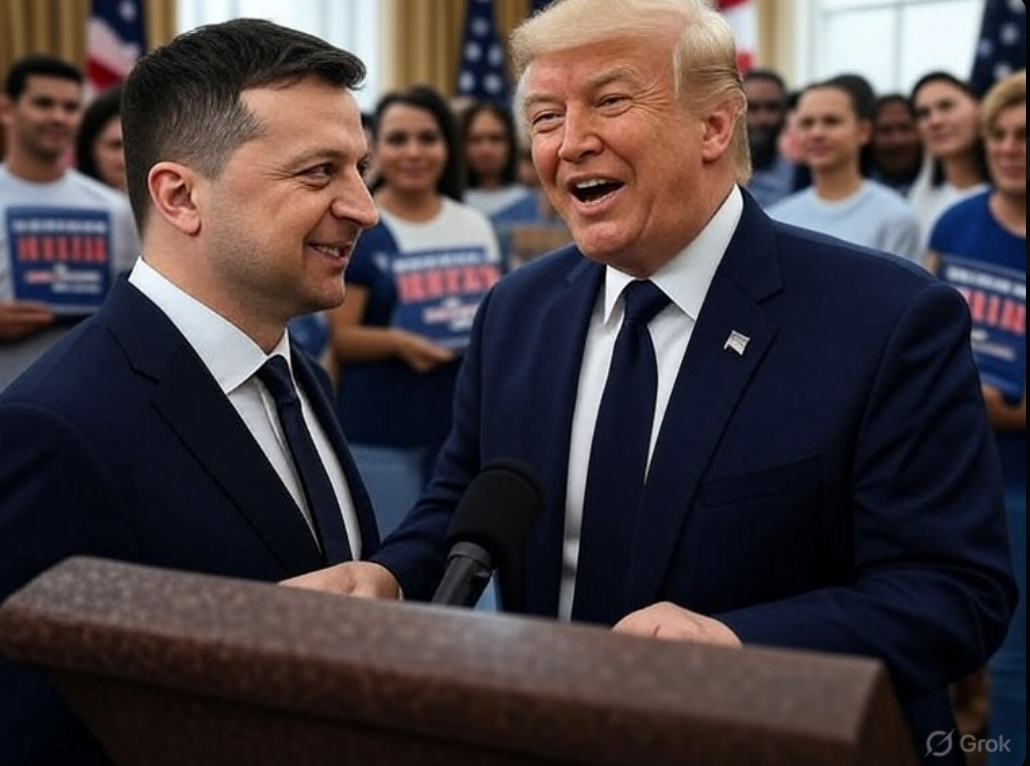
On August 18, 2025, Trump took to Truth Social to declare his intent to “lead a movement to get rid of MAIL-IN BALLOTS” and target voting machines, favoring “accurate and sophisticated Watermark Paper” instead. He followed up during his meeting with Zelenskyy, stating that “the best lawyers in the country” are drafting an executive order to end mail-in ballots, calling them “corrupt” and claiming they undermine honest elections. This pledge echoes his past criticisms, notably after the 2020 election, where he alleged widespread fraud—claims debunked by multiple audits and investigations.
The proposal targets a voting method used by over 30% of voters in 2024, per the U.S. Election Assistance Commission, including military families and those unable to vote in person. A real-world example is California, where mail-in voting surged during the pandemic, helping millions cast ballots. On X, reactions range from support for “election integrity” to warnings of voter suppression, with some citing Putin’s alleged agreement with Trump as a curious twist. An actionable tip: Follow www.whitehouse.gov for any official updates on the order—staying informed keeps you in the loop!
Legal and Historical Context
Trump’s plan hinges on his assertion that states are “merely an ‘agent’ for the Federal Government” in tabulating votes, suggesting presidential authority to dictate election rules. However, legal experts like Richard Pildes from NYU Law School argue this oversteps constitutional bounds, as the U.S. Constitution grants states the power to set election rules, with Congress holding override authority. This isn’t Trump’s first attempt—his March 2025 executive order imposing citizenship proof and Election Day deadlines was largely blocked by a federal judge in July 2025.
Historically, mail-in voting dates back to the Civil War for soldiers, expanding significantly in 2020 due to COVID-19. Countries like Canada and Germany also use it, challenging Trump’s claim that the U.S. is unique. A real-world example is Oregon, where vote-by-mail has been standard since 1998, with robust security measures like signature verification. X sentiment questions the feasibility, with some calling it a “power grab” amid legal hurdles. Check www.brennancenter.org for legal insights—your understanding can fuel the conversation!
Implications and Public Reaction
The proposed election and voting changes could reshape participation and spark debates across the nation.
Impact on Voters and Elections
If enacted, the end of mail-in ballots could affect millions, particularly vulnerable groups like the elderly, disabled, and overseas voters. In 2024, about 46.8 million votes were cast by mail, a drop from 2020’s 43% but still significant. States like Washington and Oregon, where mail voting is universal, might face logistical chaos, potentially disenfranchising rural voters who rely on it. The shift to watermark paper ballots, as Trump suggests, could slow counts and raise costs, despite his claims of efficiency—election officials note hand-counting is less accurate and time-consuming.
The establishment narrative frames this as a push for “honesty,” but critics, including the ACLU’s Sophia Lin Lakin, warn of barriers for historically excluded communities. A real-world example is a veteran in Texas, John Miller, who depends on mail voting due to mobility issues—he’s worried about losing his voice. On X, there’s a split: some cheer the move as a fraud fix, others see it as a Democratic disadvantage play. An actionable tip: Support voter access groups via www.aclu.org—your contribution can make a difference!
Public and Political Sentiment
Reactions are polarized, with X buzzing with opinions. Supporters argue it aligns with Trump’s “America First” stance, citing Putin’s supposed endorsement as validation, while detractors call it unconstitutional overreach, noting Trump’s own 2024 mail-in vote. Democrats, like DNC’s Marcus Robinson, label it a “legally baseless” attack on voting rights, while some Republicans, including Sen. Mitch McConnell, criticized a similar March order as state overstep. The establishment pushes a security angle, but evidence of widespread mail fraud remains scant, per AP analyses.
A real-world example is Pennsylvania, where mail ballots faced delays in 2020, fuelling misinformation—yet audits found no issues. Trending on X, hashtags like #ElectionIntegrity clash with #VotingRights, reflecting a divided public. The 2026 midterms, a key test for Trump’s party, could hinge on this debate. Stay updated with www.npr.org for sentiment shifts—share your take on X with #ElectionChanges2026 to join the discussion!
Looking Ahead: What’s Next?
The future of election and voting changes remains uncertain, with opportunities for engagement.
Legal Challenges and Policy Outlook
Legal battles are likely, given the March 2025 order’s court block. Experts like Michael Morley from Florida State University predict states will sue, arguing presidential overreach, with rulings possibly delaying or derailing the order before 2026. The establishment claims it’s a lawful directive, but the Constitution’s state authority precedent suggests otherwise. A historical parallel is the 2000 Bush v. Gore case, where federal intervention was limited—could this follow suit?
On X, there’s speculation about congressional action or state defiance, with some eyeing a Supreme Court review. A real-world example is Colorado’s Jena Griswold, vowing to fight any new order. An actionable tip: Track court updates at www.supremecourt.gov—your awareness can shape public dialogue!
How You Can Get Involved
This is your moment to engage. Share your views on X with #ElectionChanges2026—your voice could influence the narrative! Contact your state officials via www.usa.gov/elected-officials to express concerns about voting access. Following www.cbsnews.com keeps you updated, ensuring you’re part of this evolving story.
In conclusion, Trump’s pledge for election and voting changes through an executive order to end mail-in ballots, announced on August 18, 2025, stirs a contentious debate. With legal hurdles ahead and public sentiment divided, the 2026 midterms will test this shift’s impact.
Stay engaged as this unfolds! Share your thoughts in the comment section below and visit www.iwerenews.com for more trending news analysis.