















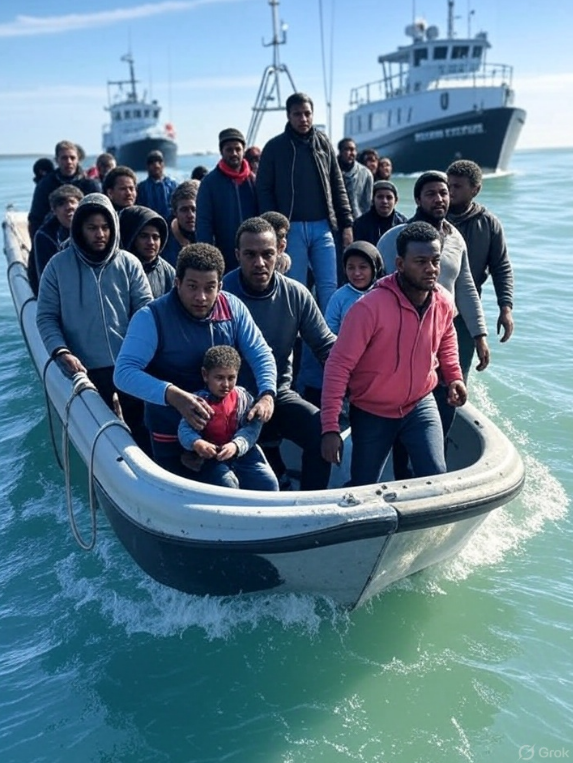
The Labour government, led by Prime Minister Keir Starmer, is facing growing scrutiny over its immigration and border security policies as Home Office data reveals a 48% surge in small boat migrant crossings in the first half of 2025. This significant uptick, with over 25,000 migrants arriving via the English Channel by mid-year, has sparked debates about the effectiveness of current strategies and reignited public concern. In this friendly and informative analysis, we’ll explore the numbers behind this rise, the criticism directed at Starmer’s administration, and what it means for the UK’s border security landscape. Whether you’re a concerned citizen, a policy enthusiast, or just curious about the latest developments, we’ve got you covered with real-world insights, X chatter, and practical tips to stay engaged. Let’s dive into this evolving story together!
The increase in small boat crossings has put pressure on the government, which promised a tough stance on illegal migration. With Home Office figures showing a jump from 16,878 crossings in the first half of 2024 to 25,019 in the same period this year, the challenge is clear. Critics argue this reflects a failure to deliver on campaign pledges, while supporters point to complex global factors. This article breaks down the situation, offering a balanced view to help you understand the stakes.
Rising Small Boat Crossings: What the Data Shows
The recent surge in small boat migrant crossings has caught the attention of both policymakers and the public, with numbers painting a vivid picture of the challenge ahead.
Home Office Statistics and Trends
Home Office data, released in early August 2025, indicates that 25,019 migrants crossed the English Channel in small boats between January and June, a 48% increase from the 16,878 recorded in the first half of 2024. This brings the total since Labour took office in July 2024 to over 50,000, according to provisional estimates. The spike is attributed to favorable weather conditions and heightened activity by smuggling networks, with daily arrivals peaking at over 1,100 on June 4, as reported by POLITICO. These figures underscore a persistent issue that previous governments, including the Conservatives, struggled to address.
Real-world examples highlight the scale. In Dover, local processing centres have seen a steady influx, with residents like Mike Tapp, the Labour MP for the area, describing the situation as “not acceptable” on X. The data also shows an increase in boat capacity, with some vessels carrying over 80 people, a trend noted by Sky News. For those keen to track this, an actionable tip is to check the Home Office’s weekly migration updates at www.gov.uk/home-office for the latest stats—knowledge is power!
Public and Political Reactions
The rise has fuelled a mix of frustration and debate. On X, sentiments range from @JamesMelville’s critique of “no tangible action” to @Keir_Starmer’s defence of new detention and return policies. Critics, including former Home Secretary Chris Philp, have labelled Labour’s approach an “abject failure,” pointing to a 16% drop in people smuggling arrests by the National Crime Agency (NCA) in 2024-25, as reported by The Independent. Meanwhile, supporters like Baroness Jacqui Smith argue the government is tackling deep-rooted issues left by the Conservatives.
This polarization mirrors past controversies, such as the 2023 Rwanda plan debates. For readers, engaging on X with hashtags like #UKBorderSecurity can keep you in the loop—share your take and connect with others! If you’re local to affected areas, attending community meetings can also offer a first-hand perspective.
Criticism of Labour’s Immigration and Border Security Policies
The Labour government’s handling of immigration and border security has drawn sharp criticism, with Starmer’s leadership under the microscope. Let’s explore the key points of contention.
Policy Shortfalls and Public Discontent
Starmer’s pledge to “smash the gangs” and restore order to the asylum system has been met with skepticism. The scrapping of the Rwanda scheme, replaced by a £541 million Border Security Command, has been criticized as ineffective, with crossings up 47% year-on-year, per The Standard. The “one in, one out” deal with France, launched in August 2025, has seen no significant reduction, with @statsjamie on X calling it “PR spin” as numbers remain high.
Public anger is palpable, with violent protests outside migrant hotels reported by GB News, reflecting frustration over costs—estimated at billions for asylum accommodation. A Labour MP, speaking anonymously to The Independent, expressed frustration at the “pace of action,” echoing constituents’ views. This discontent has boosted Reform UK’s popularity, with Nigel Farage capitalizing on the issue, as noted by The Spectator. For a deeper dive, reading party manifestos on www.labour.org.uk can clarify their stance.
Government Response and Future Plans
In response, Starmer has emphasized international cooperation, hosting a summit with 40 countries on March 31, 2025, to target smuggling networks, as covered by LBC. The Border Security, Asylum and Immigration Bill, introduced in January, grants counter-terror-style powers to disrupt gangs, though MP Graham Stringer doubts its impact, per The Telegraph. The NCA reports 347 disruptions in 2024-25, up 33%, but arrests fell, suggesting a shift in strategy.
The government defends its approach, highlighting 24,000 returns since July 2024, the highest in eight years, and a £33 million investment to seize boats and engines. However, with deaths at sea rising—14 in 2025 so far, per The Independent—critics argue deterrence is lacking. An actionable tip: Contact your MP via www.writetothem.com to voice concerns or support, shaping future policy. For global context, compare UK trends with EU migration data on www.eurostat.eu.
What This Means for the Future
The immigration and border security challenge under Labour is a test of governance and public trust, with long-term implications. The 48% rise in crossings signals a need for innovative solutions, balancing security with humanitarian needs. X trends show growing calls for legal routes, while critics push for stricter controls. This debate will shape the 2027 elections, with communities like Dover feeling the immediate impact.For readers, staying informed is key. Follow trusted sources like BBC News or Sky News, and join local forums to discuss solutions. The government’s next steps—possibly scaling the France deal or revisiting ECHR rules—will be critical. Your voice matters, so get involved!
In wrapping up, the immigration and border security landscape in 2025 under Starmer’s Labour government is a complex puzzle. The 48% surge in small boat crossings highlights both the scale of the challenge and the criticism it attracts. With public sentiment split and policy under review, the road ahead is uncertain but ripe for engagement.
Share your thoughts in the comment section below and visit www.iwerenews.com for more trending news analysis.